nervous system’s reef

Posted: November 19th, 2012 | Author: Jessica Rosenkrantz | Filed under: inspiration, nature, video | Tags: , | No Comments »

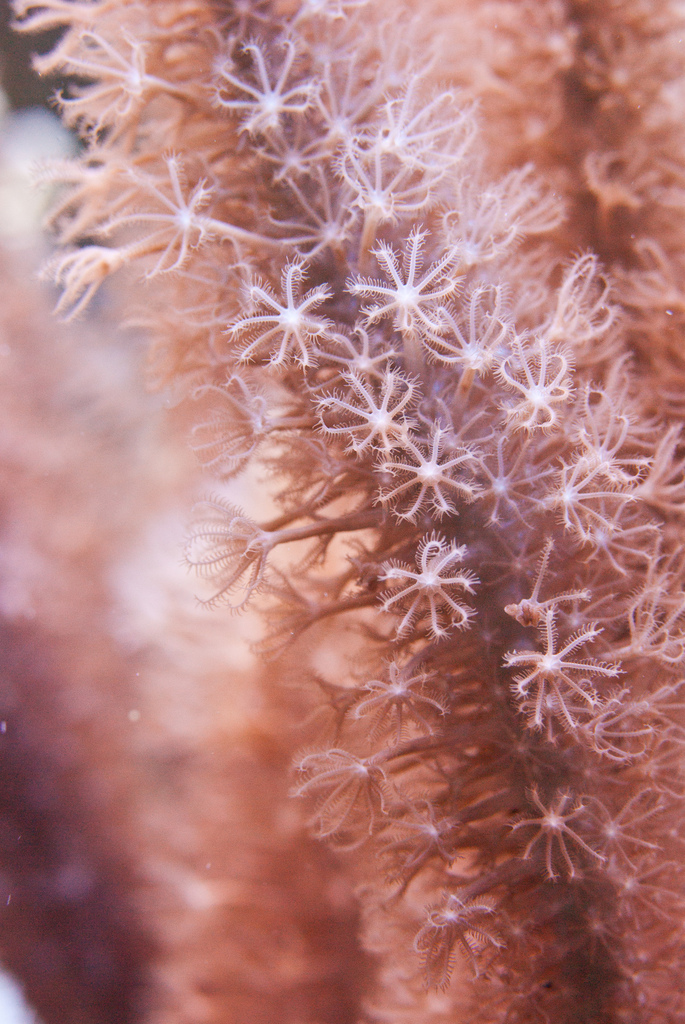
I’ve always been fascinated by coral. At first, for the otherworldly environments they create on the ocean floor. And later, for a whole range of reasons including their fascinating biological relationship with photosynthesizing algal symbionts, their geologically significant reef building biomineralization activity, and bizarre, modular growth habits.

For years I’ve been going to public aquariums and photographing corals through the glass. But, I figured that having my own aquarium would make it possible for me to carefully observe the growth processes of different species. Three weeks ago I setup my first saltwater aquarium. It sits at the entrance to the Nervous System office. And currently houses 6 coral colonies, 4 snails, and 2 sexy shrimp (yes that is actually the common name of this species).

Today I introduce you to two of the coral colonies living in our tank via short videos I shot last night. Each was shot in real time with a macro lens.

Next week I’ll introduce you to some of the other inhabitants. I also hope to do some projects in the coming year centered around our tank’s inhabitants as they grow.

For all you aquarium nerds out there here are the tank specs: Elos Mini 20 gallon cube aquarium with Elos Sump, Elos PS200 Needlewheel Skimmer, Elos Osmocontroller 2 auto top off, Ecoxotic 18” Panorama Pro LED Fixture, Vortech MP10 powerhead.


Fossilized – the patterns of glyptodon shells

Posted: February 9th, 2012 | Author: Jessica Rosenkrantz | Filed under: inspiration, travel | Tags: , | 2 Comments »

Glyptodons are the extinct ancestors of modern day armadillos.  These giant mammals roamed the Americas from 2.5 million years ago until just as recently as 10,000 years ago before dying out during the megafaunal extinction.  They were about the size of a Volkswagon Beetle and weighed as much too, due to their massive domed shell.  The shell was constructed of hundreds of hexagonal plates formed of keratin called scutes.  Each scute is about an inch thick and they interlock at their edges to made a huge rigid shell.  Grooves in the scutes served as channels for blood vessels that nourished the Glyptodon’s skin.  And holes in the scutes formed attachment points for hair follicles that served as sensors (important since they couldn’t see around their shell).

The type of tiling pattern seen in this shell remind me strongly of a tangent plane approach to paneling a surface of positive curvature.

This fossil of a smaller glytodon called Propalaehoplophorus minor better shows the rosette pattern characteristic of glyptodon armor.  Propalaehoplophorus lived during the Miocene era.

I photographed these tremendous fossils in the Wing of Mammals and Their Extinct Relatives at the American Museum of Natural History.

A close up view of the fossil scutes.


Becoming Lichenized

Posted: November 25th, 2011 | Author: Jessica Rosenkrantz | Filed under: inspiration, nature, thoughts | Tags: , | 4 Comments »

Recently, my friend Shaunalynn Duffy asked me to give a talk at a Sprout event centered around Fungi. Specifically she was interested in the photographs of lichen I’ve taken over the past couple of years. I decided to speak a little about why I find lichen so fascinating and below you’ll find some of my thoughts in the matter. At the end, I include a brief aside on how our architecture should start being lichenized.

Why I like Lichen

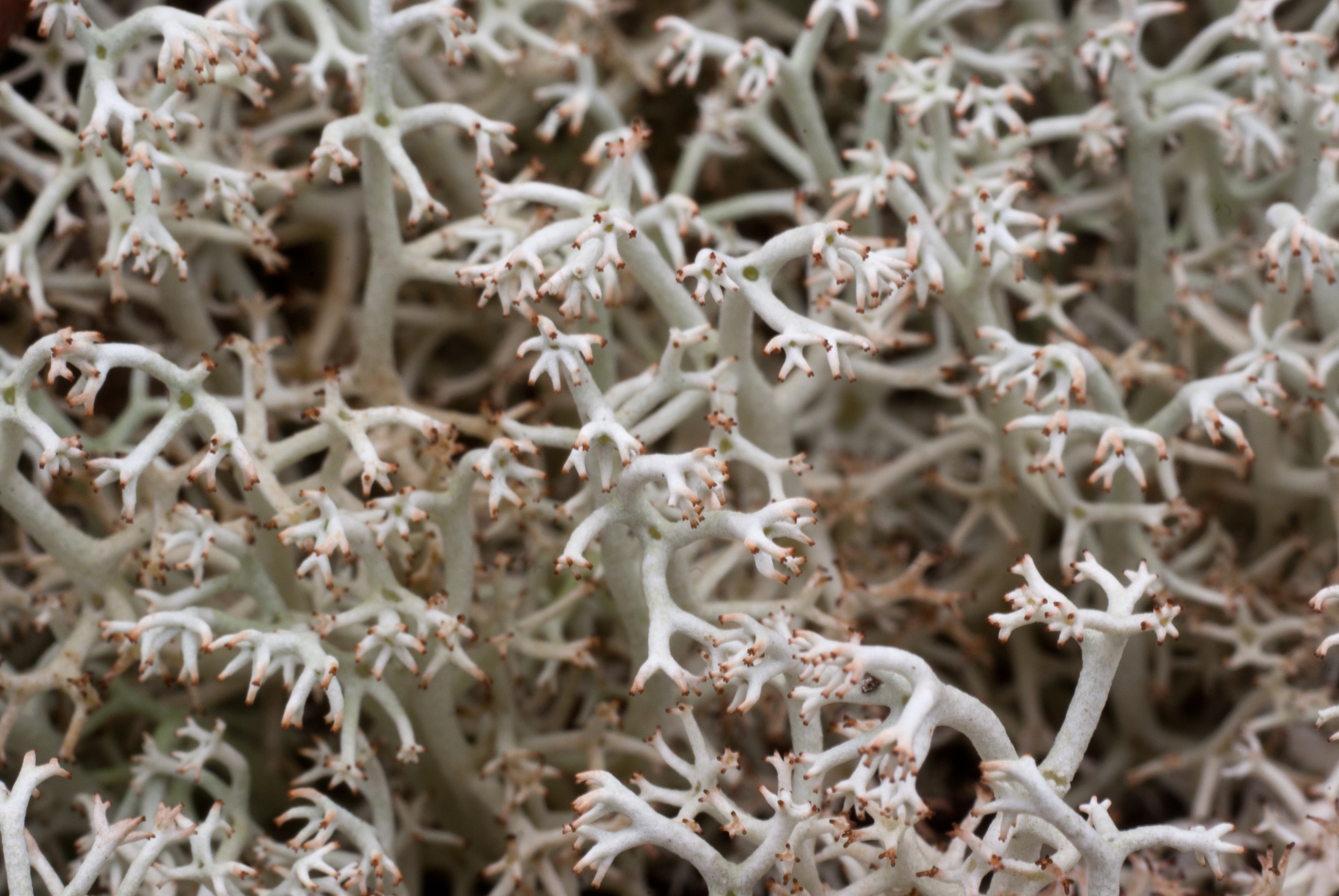
lichen - Cladonia rangiferina

lichen - Cladonia rangiferina
Cladonia rangiferina, photographed in the Adirondacks, NY 07/11/2011

Lichen are strange conglommerations of two or more species from completely different biological domains of life. A lichen usually consists of a fungus and one or more photosynthesizing partners, usually it’s partnered with a single type of algae but sometime it can be paired with multiple types of algae or even cyanobacteria (photosynthesizing bacteria). Most fungi are decomposers, they feed on the detritus of other living things like leaves, soil and the dead. They live their lives in the soil hidden from observation except occasionally when their reproductive organs emerge for brief gaudy fits of spore dispersal. Fungi live inside their food. Their body is a huge absorptive mass of long linear branching cells called hyphae which provide them with a really big surface area to absorb nutrients from the soil. They typically do not build any complex structures, tissues or organs except when they need to reproduce; then they may build odd fruiting bodies like mushrooms to spread their spores. The shapes of these structures are adapted to their environment and it’s inhabitants who they must depend on to carry their offspring to new sites.

hanging lichen
Ramalina menziesii, photographed at Drakes Estero in Point Reyes, CA 09/04/2010

But, lichen are different. When fungus partners with a photo synthesizer, it undergoes a dramatic transformation in physiology, chemistry, and life-style. While fungus is comprised of one large, simple structure of filamentous hyphae, lichen develop a myriad of complex structures to perform a variety of function. While fungus live as decomposers, the last step in a richly developed ecosystem, lichen are colonizers: some of the first organisms to enter desolate and dangerous environments such as toxic slag heaps. They have developed unique chemical pathways that can breakdown rock or oil.


Rhizocarpon geographicum, photographed at Glacier National Park, MT 07/15/2009

Some people describe a lichen as a fungus that has taken up farming, growing sugars in little algae patches throughout it’s body, in contrast to the decomposing habits of normal fungi. If fungi can be described as living inside their food, then lichen are essentially fungi turned inside out. Their food lives inside of them.

But I find it more intriguing to think of lichen as a fungus trying to be a plant. Like a plant it has photosynthesizing portions which produce food (the algae or cyanobacteria) but also structural components (the fungi) which protect and arrange the photosynthetic elements. As a photosynthesizing organism, lichen are under a lot of the same constraints as plants. They have to effectively collect sunlight and water. They have to be rooted to something, they have to resist gravity… Correspondingly, lichen have independently evolved very similar body plans to plants…..despite have an entirely different chemical and biological makeup.

vacation in yellowstone national parkLetharia vulpina in yosemite
crusty: photographed at Yellowstone National Park, WY 07/20/2009
leafy: photographed at Woodstock Land Conservancy, NY 12/24/2006
branchy: photographed at Yosemite National Park, CA 01/31/2008

Lichens tend towards three general body plans: crusty, leafy and branchy or crustose, foliose, and fruticose as they are usually called. But often a single lichen specimen may exhibit several of these morphologies as well as other less commonly seen ones. There are scaly lichens, powdery lichens and even gelatinous ones! But in all these body plans, the fungus must build transparent greenhouses of fungal tissue which protect the algae from UV light while displaying them in a way that allows light to be collected. They have to prevent the algae from dehydrating while allowing for carbon dioxide to diffuse into the algae during photosynthesis. These tasks are much more diverse from the normal role of fungal hyphae, which must simply spread out through the soil, exploring and absorbing food and this leads to much more morphological differentiation.
city of lichen

amazing lichen agglomeration

lichen
Cladonia Cristatella at the Woodstock Land Conservancy, NY

What about reproduction though? How can a lichen, which is actually a symbiosis of multiple types of creatures produce more of itself? Reproduction is complicated for lichen. Only the fungus can reproduce sexually, sexual reproduction for the algae is suppressed. The fungus produces spore dispersing structures. One of the most common seen among lichen are apothecia, these are the cup and disc-like growths you see in many of my photos. They can vary in size from under a millimeter to over 2cm. Sometimes they are the same color as the rest of the lichen other times they are dramatically color. Sometimes they are spread throughout the body of the lichen other time they protrude outwards on long stalks up to 1cm long.

some crustose lichen lichen at fjordland national park, New Zealand
left: lichen at Indian Lake in the Adirondacks, NY 7/21/2010
right: lichen at Fjordland National Park, New Zealand 08/28/2008

So the fungus produces these structures for the dispersal of spores but without an algal partner these spores can’t produce a new lichen. This means that if the spore lands somewhere where there happens to be some free living algae of the right species it might be able to lichenize and survive but most algae that form lichen can’t live in their environments outside of the lichen thallus (body). To get around this constraint lichen have developed several types of propagating units they can disperse that contain both fungus and algae. Also many can produce simply through dispersal of the lichen thallus; it a bit rips off and lands somewhere else, it may take establish a new lichen.

lichen at fjordland national park, New Zealand
lichen photographed at Fjordland National Park, New Zealand 08/29/2008

Becoming lichenized

towards a new architecture

Fungi have incorporated algae and other photosynthesizers into the structures they build to provide themselves with a dependable sun-powered energy source. They’ve become lichenized. We should too.

What would happen if our buildings became “lichenized”? As our knowledge of biotechnology and our environmental concerns continue to expand, we should take inspiration from the adventurous fungi and consider how we can better partner with photosynthesizers. How can algae or cyanobacteria be used in architecture to provide energy for our building systems? The self similar body plans of lichen and plants already inform us of many solutions to problem of how to compactly array photosynthetic cells to the sun. Research into biophotovoltaics or “Microbial solar cells” suggests we may be able to harvest electricity from photosynthesizing cells directly in addition to producing a range of useful chemicals and fuels.

Photosynthesizing surfaces offer many benefits over photovoltaic cells. The a biofilm of algae is a self-organizing, continuously growing system; hence it can self-repair leading to less maintenance and greater performance over a longer period of time. Photosynthetic systems have intermediate energy carriers which means energy can still be generated in the dark. Photosynthetic systems have a vibrant aesthetic appeal, by adding them to our buildings and cities we’d be “greening” them.

So what happens when our built environment becomes lichenized? As with the fungus whose structure and lifestyle change so dramatically, how can our buildings, urban planning, and society change when we are freed from the grid of infrastructure that currently supports, but also limits us.

Interested in this? Here are some articles I found interesting. Please send more my way if this is your area of interest because I would love to learn more.

Microbial solar cells: applying photosynthetic and electrochemically active organisms
Direct Extraction of Photosynthetic Electrons from Single Algal Cells by Nanoprobing System
Development of Bio-Photovoltaic Devices


a visit to the New England Aquarium

Posted: June 2nd, 2011 | Author: Jessica Rosenkrantz | Filed under: inspiration | Tags: , | No Comments »

On Sunday, we visited the New England Aquarium in Boston, one of my favorite places in the city.  Here are some photos I took there.   Coral, bubble tip anemone, an urchin and a cuttlefish.


video: Hele-Shaw Cell experiments

Posted: April 10th, 2011 | Author: Jessica Rosenkrantz | Filed under: inspiration, work in progress | Tags: , , , | 2 Comments »

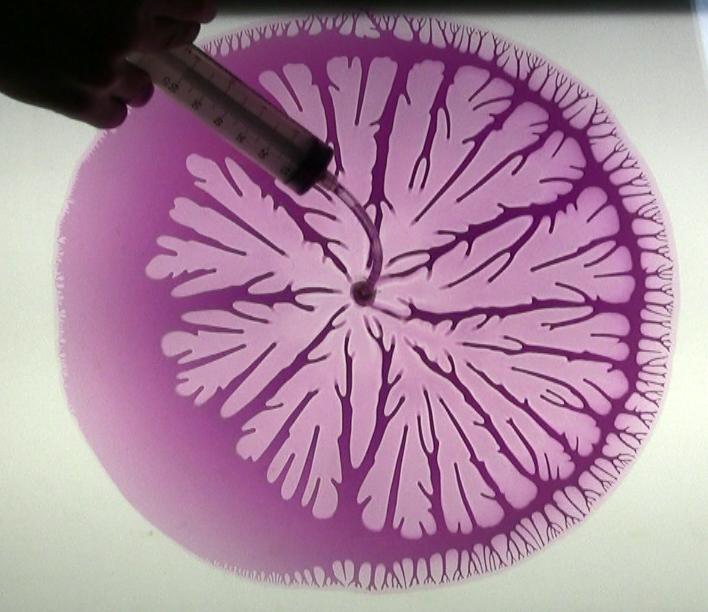
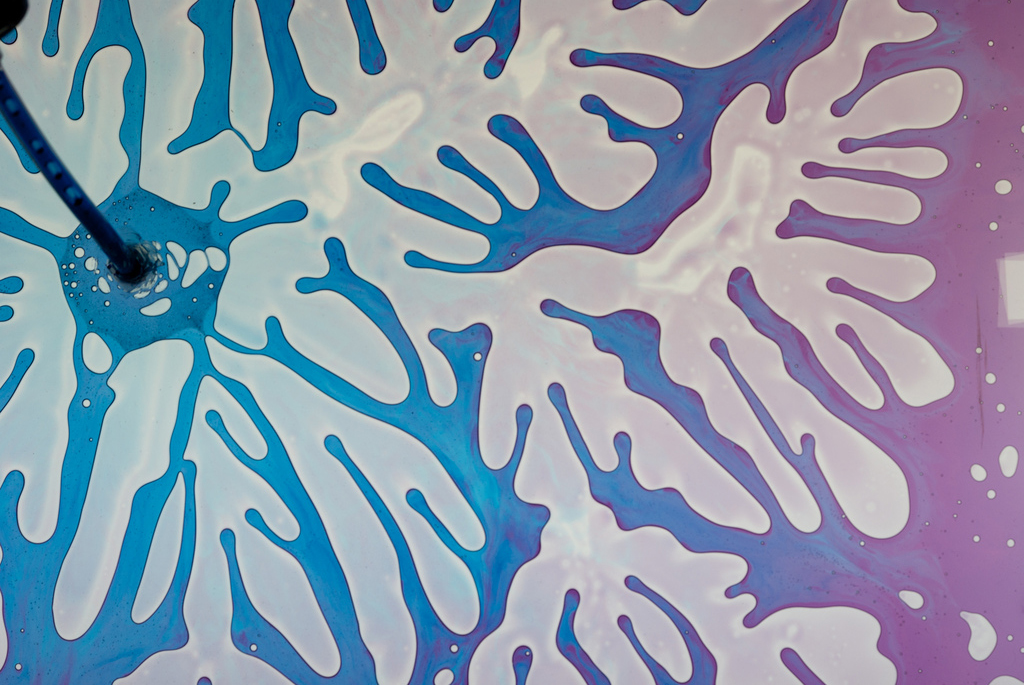
The video documents several Hele-Shaw Cell experiments using two 16×20″ panes of glass. Intricate branching patterns emerge as we insert glycerin, air and water into the cell.


experiments

Posted: April 8th, 2011 | Author: Jessica Rosenkrantz | Filed under: inspiration, work in progress | Tags: , , | No Comments »

We spent Wednesday evening at Sprout working on a larger scale Hele-Shaw cell experiment and trying to figure out what materials and setup make interesting patterns.  I’m planning to upload a bunch of videos of the results later tonight.   But here’s a preview.


Researcher Profile: Nigel Goldenfeld

Posted: March 28th, 2011 | Author: Jesse Louis-Rosenberg | Filed under: inspiration | No Comments »

Nigel Goldenfeld is a professor of Physics at the University of Illinois, Urbana-Champaign who has worked on a wide-variety of fascinating topics.  We have encountered his research time and time again, more than any other scientist.  From his bio: “Nigel’s research explores how patterns evolve in time; examples include the growth of snowflakes, the microstructures of materials, the flow of fluids, the dynamics of geological formations, and even the spatial structure of ecosystems. Nigel’s interests in emergent and collective phenomena extend from condensed matter physics, where he has contributed to the modern understanding of high temperature superconductors, to biology, where his current work focuses on evolution and microbial ecology.”

Adaptive meshing for phase-field model

Much of his work focuses on the dynamics of solidification and crystal growth.  We encountered this research recently while studying dendritic solidification and viscous fingering, which we have begun to explore here.  His work spans theoretical analysis of complex dynamics and instability as well as numerical studies.  I’ve specifically been looking at his work on efficient methods for simulating dendritic structures which uses adaptive mesh refinement to increase computational efficiency in phase-field models.  Phase-field models are particularly attractive for the implicit representation of phase boundaries. Instead of explicitly representing geometric boundaries by surfaces or curves, which can be complex, phases are represented as a numerical field distributed in space, allowing for direct use simple simulation techniques like finite differences.  He has a host of papers on other topics involving crystal dynamics that I have not yet explored.

Simulation of sinter terrace formation

Emergence of foams from the breakdown of the phase field crystal model

Like Hammer, we first found Goldenfeld’s work while researching sinter terraces.  He participated in physical and computation studies of the dynamics of travertine dams, building a numerical model based on both the fluid and chemical dynamics of the precipitation that leads to terrace formation, unlike Hammer’s simplified model that only looked at fluid flow.

While much of his research has focused on dynamics and pattern formation in materials, his research group applies the principles of complexity learned from this broadly with research in geology, cosmology, population dynamics, autism, ecology, genetics, and more.

His more recent work looks at complex dynamics in biological systems.  It explores topics from genetics to microbial ecology. The thrust of the research is looking at the emergence and origins of life.  He has a wonderful overview of this research here.  It also contains a great definition of complex systems:

“Complex systems are characterized by the presence of strong fluctuations, unpredictable and nonlinear dynamics, multiple scales of space and time, and frequently some form of emergent structure (riots, herds, .). The individual components of complex systems are so tightly coupled that they cannot usefully be analyzed in isolation, rendering irrelevant traditional reductionist approaches to science, obscuring causal relationships, and distinguishing complexity from mere complication. Biological complexity, or biocomplexity, arises from the inclusion of active components, nested feedback loops, and multiple layers of system dynamics, and is relevant to numerous aspects of the biological, medical and earth sciences, including the dynamics of ecosystems, societal interactions, and the functioning of organisms.”


CapturingComplexity – new shop!

Posted: March 14th, 2011 | Author: Jessica Rosenkrantz | Filed under: inspiration, photography | Tags: | 1 Comment »

CapturingComplexity is a new shop on Etsy where I am selling some of my macro photography. Much of the inspiration for Nervous System comes from natural systems that we’ve been lucky enough to observe in person during our travels. The photographs are a way to encapsulate a visual of what interests us and are a reminder of phenomena we would like to later research.

I’ve posted a few of my favorite images from our hikes all over the world. The pictures feature the Catskills, the Northern California coast, Iceland and New Zealand and are available in 8×12″and 12×18″ sizes. All of the photographs were captured using a Pentax k10d camera with an old 55mm manual focus macro lens using natural light.

Please check out the new shop and let me know what you think!


Researcher Profile: Oyvind Hammer

Posted: February 23rd, 2011 | Author: Jesse Louis-Rosenberg | Filed under: inspiration | No Comments »

When we start working on a new project, we do a lot of preliminary research. This usually involves a wide literature search on the topic of interest, be it leaf venation, reaction diffusion, sand dunes, etc. While fascinating, much of this research does not make it into our work. However, after reading dozens of papers, we have found that we often cross paths with certain scientists who appear to have many of the same interests as we do. In an effort to catalog this research and show our appreciation for these scientists’ work, I am a creating a series of “Researcher Profile” posts that highlight some of the exciting work by a specific researcher.

My first post is on the work of Oyvind Hammer, a paleontologist at the Natural History Museum of the University of Oslo in Norway. His work focuses on geological processes and developmental paleobiology with an emphasis on computational methods.

(image of Hammer courtesy of the Natural History Museum of the University of Oslo)

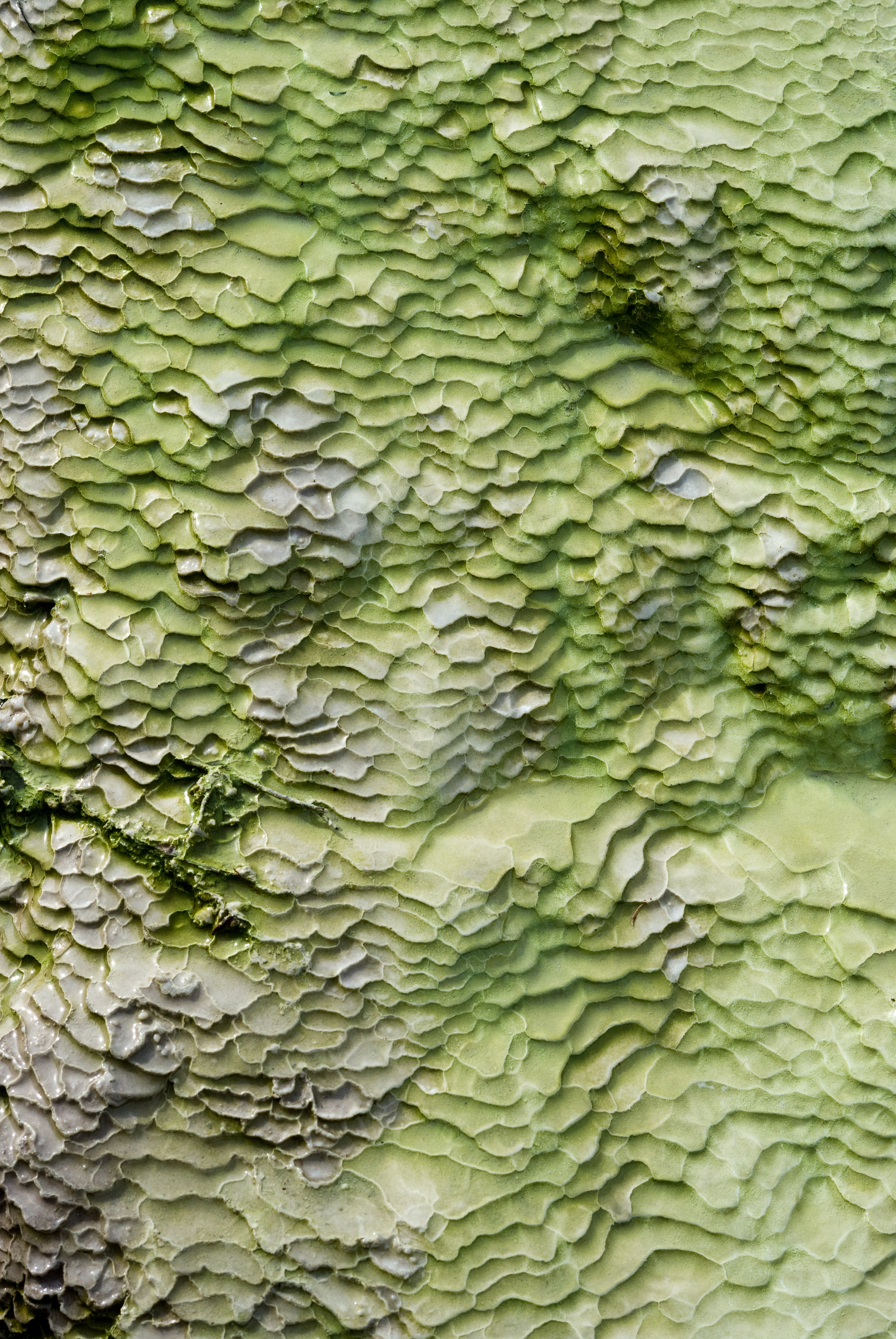
We first encountered him while researching sinter terraces, which we discovered at Wai-O-Tapu in New Zealand (we will explore this more in the future). This type of terracing occurs at geothermal sites where hot, mineral rich water flows out of the earth. A process of chemical deposition combined with fluid flow builds these incredible terraced structures that can form at the scale of a few millimeters to over a meter across. In a paper entitled the Dynamics of Travertine Dams (pdf), Hammer proposed a vastly simplified computational model that could reproduce the formation of terraces. This model does not explicitly address the chemical dynamics, instead it merely links fluid flow to deposition. This links a specific geologic formation to similar formations such as terraces that form in ice flows. Perhaps most exciting it starts to define a continuous space of pattern formation that spans from fluid flow causing erosion, as in braided rivers, to flow linked to deposition leading to terraces. It transitions from a simulation of a phenomena to a pattern forming principle.

Years later, we discovered the wonder of ammonite suture patterns, which we posted about here. While researching how these patterns form, we came across many competing theories. Hammer is a proponent of a reaction diffusion model. In a paper titled Reaction Diffusion Processes: Application to the Morphogenesis of Ammonoid Ornamentation (pdf) he makes a case for reaction diffusion type systems playing a role in the growth of ammonite ribs, though the model might be combined with more mechanically based processes as well.

You can find a list of Hammer’s publications on his website here: http://folk.uio.no/ohammer/

It is exciting to see when researchers seem to have the same fascination with the natural world as we do. I am always surprised when researching some new topic when I find a paper by someone whose work I’m already familiar with. Even though it seems to happen a lot. At which point I have to check out all the other papers they wrote. And write a blog post about them.


ammonite suture patterns

Posted: December 30th, 2010 | Author: Jessica Rosenkrantz | Filed under: inspiration, nature | Tags: , , | 2 Comments »

For the holidays, Jesse gave me a 110 million year old fossil Ammonite. It’s a Cleoniceras Ammonite to be specific, found in Madagascar. Ammonites are extinct cephalopods that lived in shells. That means their closest relatives are the modern day Nautiluses, Octopi, Squid, and Cuttlefish. Like the Nautilus, Ammonites gradually add onto their shell to accommodate their increasing body mass. As they extend their shell they build a wall, closing up the now too narrow portion of the shell behind them as they move into the larger portion of the spiral.

Chambered Nautilus Shell - detail Nautilus by PacificKlaus, on Flickr

photos of a Nautilus. cut in half (left) by Jitze1942. alive (right) by PacificKlaus

Now the really cool thing about the Cleoniceras Ammonite, is that unlike the Nautilus, the morphology of the tissue wall they build between the chambers is not just a smooth curved wall. Instead it has a bizarrely complex fractal 3-dimensional shape. These patterns are called “suture patterns” and they mark the intersection of the septum walls with the shell. Scientists can’t agree why the septum walls are so complexly furrowed or even how they formed. But they certainly have published many conflicting arguments about the subject.


Here’s a snapshot
Ø. Hammer proposes a reaction-diffusion explanation for the formation of suture patterns (right below)
A. Checa and friends propose a viscous fingering explanation, where the two fluids at play are the cameral liquid and connective tissue (left below)
F.V. De Blasio uses finite element analysis to argue that the high sinuosity is an evolutionary response to external pressure, reinforcing the shell in response to hydrostatic
pressure

  • Hammer, Ø. 1999. The development of ammonite septa: an epithelial invagination process controlled by morphogens? Historical Biology 13:153-171.
  • Hammer, Ø. & Bucher, H. 1999. Reaction-diffusion processes: Application to the morphogenesis of ammonoid ornamentation. GeoBios 32:841-852.
  • García-Ruiza, J. & Checa, A. 1993. A model for the morphogenesis of ammonoid septal sutures. GeoBios 26:157-162.
  • Lewy, Z. 2002a. The function of the ammonite fluted septal margins. Journal of Paleontology, 76::63-69
  • De Blasio, F.V. 2008: The role of suture complexity in diminishing strain and stress in ammonoid phragmocones. Lethaia 41:15–24.