explaining lava forms

Posted: March 5th, 2013 | Author: Jessica Rosenkrantz | Filed under: nature, photography, travel | Tags: | 3 Comments »

We recently returned from Hawaii where we spent a week exploring Hawai’i Volcanoes National Park. The Big Island of Hawaii is made up of 5 shield volcanoes and was born a relatively recent 300,000 years ago. Today, three of the volcanoes (Kileaua, Mauna Loa, Hualalai) are still active, one is dormant (Mauna Kea), and one is extinct (Kohala). Kileaua is one of the world’s most active volcanoes and has been erupting continuously since January 3, 1983. We visited its active vent to see the flow of red hot lava and we hiked many miles in the lava fields formed by its prior eruptions. As you might have predicted, we found the fluid-like lava rock fascinating and documented its shapes in hundreds of photographs (slideshow below and flickr set). We also started reading about how and why patterns form in lava flows.

Lava
Lava is the molten rock expelled by a volcano during an eruption. Lava flows can have very different properties based on their chemical composition, temperature, eruption rate, crystal content, and bubble content. The current lava flow in Hawaii is an effusive flow of basalt with low viscosity and high temperature. It flows quickly and smoothly, leaving glassy rippled rock in its wake. Geologists call this type of flow pahoehoe, a Hawaiian name that equates the lava forms to swirling water (“hoe” = to paddle). This is an apt name as the lava rock is festooned with incredible patterns of contorted wrinkles, ripples, and folds. What causes these forms?

Lava Flows and Folds
When lava flows, the outside layer quickly cools forming an exterior crust. In fact, many of the lava patterns we found were quite thin and hollow inside where the lava had subsequently evacuated after the structures were formed. This cooled layer is significantly more viscous than the lava below acting like a viscous sheet. Folds begin to form when the flow compresses due to the slowing of the flow front. This compression could be caused by hitting an obstruction or entering a narrow channel. These folds form in the span of seconds to minutes.

Viscous Sheets
The folding of viscous or elastoviscous materials has been widely studied recently both in physical experiments with non-Newtonian fluids and numerical simulations. Pahoehoe lava forms exhibit relatively regular fold properties; their folds form perpendicular to the direction of flow with a consistent wavelength and amplitude. This property is shown very purely in examples of viscous sheets. Check out the videos below. One shows the buckling of pancake batter being poured into a pan (not kidding) and the other is a computer animation of similar from a paper presented at SIGGRAPH 2012.


Pahoehoe Dynamics
Pahoehoe flows exhibit significantly more complex dynamics than these isolated examples, incorporating viscoplastic behavior, cooling, shallow flow, and more with the folding process. Lava flow is not strictly a viscous sheet; it is a fluid with a layer of high viscosity that smoothly transitions to a large volume of lower viscosity fluid. This means that the lava exhibits fluid behavior generating interesting swirls and movement. You can even get lava spirals when multiple flows meet. Additionally, as the lava cools and compresses, the viscous crust thickens. Thickening increases the wavelength of the folds that form creating a larger scale pattern. This change in scale can occur 2-4 times over the cooling process, leading to recursive folds with a complex braided appearance.

diagram from 'Formation of multiple fold generations on lava flow surfaces: influence of strain rate, cooling rate, and lava composition' (1998) by Gregg, TKP, Fink JH, Griffiths RW

This explanation comes from the research of Jonathan Fink who has published a number of papers exploring ropy pahoehoe since 1978. The first paper, “Ropy Pahoehoe: surface folding of a viscous fluid”, describes how he measured the profiles of lava flows using this sweet apparatus.

In later papers, he uses experiments where liquid polyethylene glycol wax is forced through a hole into a tank of cold water to recreate different phenomena exhibited by lava flows. By varying the rate of cooling and the flow rate, he was able to produce features we see in basaltic lava flows including transverse folds, pillows, rifts and levees.

diagram from 'A laboratory analogy study of the surface morphology of lava flows extruded from point and line sources' (1992)

Other Interesting Stuff We Noticed About Lava
The varying degrees of oxidation and chemical composition lead to different colors.

Lava is very porous. It’s riddled with tiny vesicles where it hardened around gas bubbles.

You can poke a walking stick into the active lava flow and create your own glassy hunk of fresh rock.

Lava can form very regular features like these tiny folds.

But, it also can make bizaare features that look more like draped fabric than rock.

Pahoehoe makes forms called “toes” as hot lava breaks out from the cooling front and “entrails” when it moves quickly down a slope.

Lava just keeps piling up

And will flow over anything

Bibliography
Batty et al, “Discrete Viscous Sheets”, 2012
Fink, “Surface folding and viscosity of rhyolite flows”, 1980
Fink and Fletcher, “Ropy pahoehoe: surface folding of a viscous fluid”, 1977
Fink and Griffiths, “A laboratory analog study of the surface morphology of lava flows extruded from point and line sources”, 1992
Gregg et al, “Formation of multiple fold generations on lava flow surfaces: Influence of strain rate, cooling rate, and lava composition”, 1998
Griffiths, “The dynamics of lava flows”, 2000
Skorobogatiy and Mahadevan, “Folding of viscous sheets and filaments”, 2000


Fossilized – the patterns of glyptodon shells

Posted: February 9th, 2012 | Author: Jessica Rosenkrantz | Filed under: inspiration, travel | Tags: , | 2 Comments »

Glyptodons are the extinct ancestors of modern day armadillos.  These giant mammals roamed the Americas from 2.5 million years ago until just as recently as 10,000 years ago before dying out during the megafaunal extinction.  They were about the size of a Volkswagon Beetle and weighed as much too, due to their massive domed shell.  The shell was constructed of hundreds of hexagonal plates formed of keratin called scutes.  Each scute is about an inch thick and they interlock at their edges to made a huge rigid shell.  Grooves in the scutes served as channels for blood vessels that nourished the Glyptodon’s skin.  And holes in the scutes formed attachment points for hair follicles that served as sensors (important since they couldn’t see around their shell).

The type of tiling pattern seen in this shell remind me strongly of a tangent plane approach to paneling a surface of positive curvature.

This fossil of a smaller glytodon called Propalaehoplophorus minor better shows the rosette pattern characteristic of glyptodon armor.  Propalaehoplophorus lived during the Miocene era.

I photographed these tremendous fossils in the Wing of Mammals and Their Extinct Relatives at the American Museum of Natural History.

A close up view of the fossil scutes.


dynamic patterns of water and stone

Posted: September 28th, 2010 | Author: Jessica Rosenkrantz | Filed under: nature, travel | No Comments »

The beach in Bolinas, CA is composed entirely of Monterey Shale, a thinly-bedded grey stone that formed during the Mioscene era about 23 to 5 million years ago.  Watching the tide come in over the stone beach I noticed that while the water initially wetted the entire surface equally, it dried unevenly and amazing cellular patterns emerged.

When the stone is dry, it was difficult to see the cracks that cover the beach (left). But the stone on the surrounding vertical cliff faces had been shaped by wind erosion along the fractures into striking 3D relief (right).

After I noticed the potential for pattern formation, we started splashing water everywhere to create more and more  wide spread and intricate patterns.  The forms disappeared quite quickly so we were free to play as much as we wanted.

You can find a lot more pictures in my flickr stream.  Went a little overboard on the pictures because it was just that awesome and surprising.


california academy of sciences

Posted: September 4th, 2010 | Author: Jessica Rosenkrantz | Filed under: inspiration, travel | No Comments »

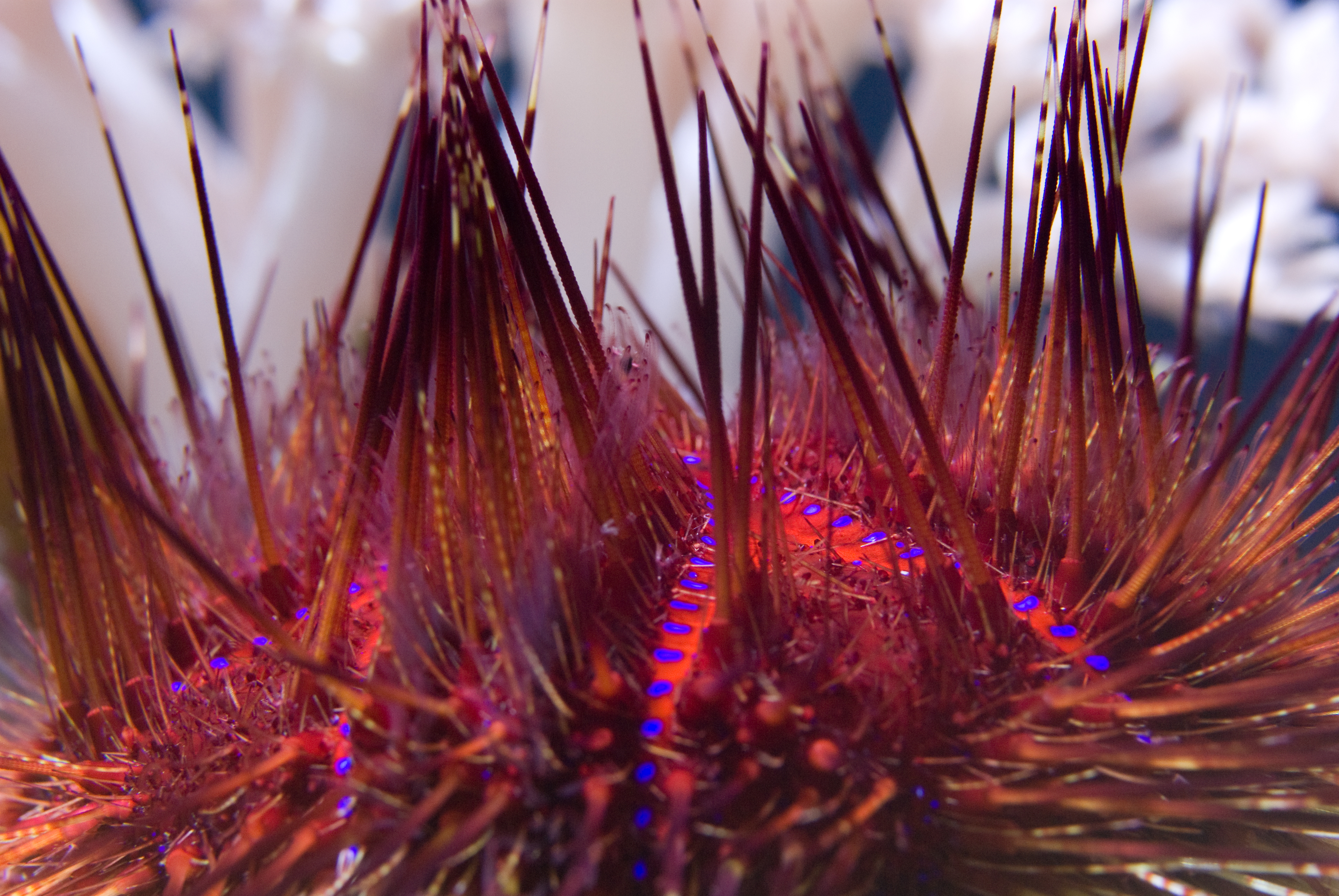
We are in San Francisco, CA for the opening of our reaction show. Today we explored the Conservatory of Flowers and California Academy of Sciences in Golden Gate Park. Here are a few photos of creatures at the academy.

urchin

leather coral ? spotted fish

hard coral moray eel

The top picture is some kind of urchin. Followed by a leather coral, a spotted fish (species?), a hard coral, and a moray eel. Both the fish and eel have patterns reminiscent of reaction diffusion. We also had a chance to see most of the fish shown in our previous posting on reaction diffusion in person.


adirondacks

Posted: August 11th, 2010 | Author: Jessica Rosenkrantz | Filed under: nature, travel | Tags: | No Comments »

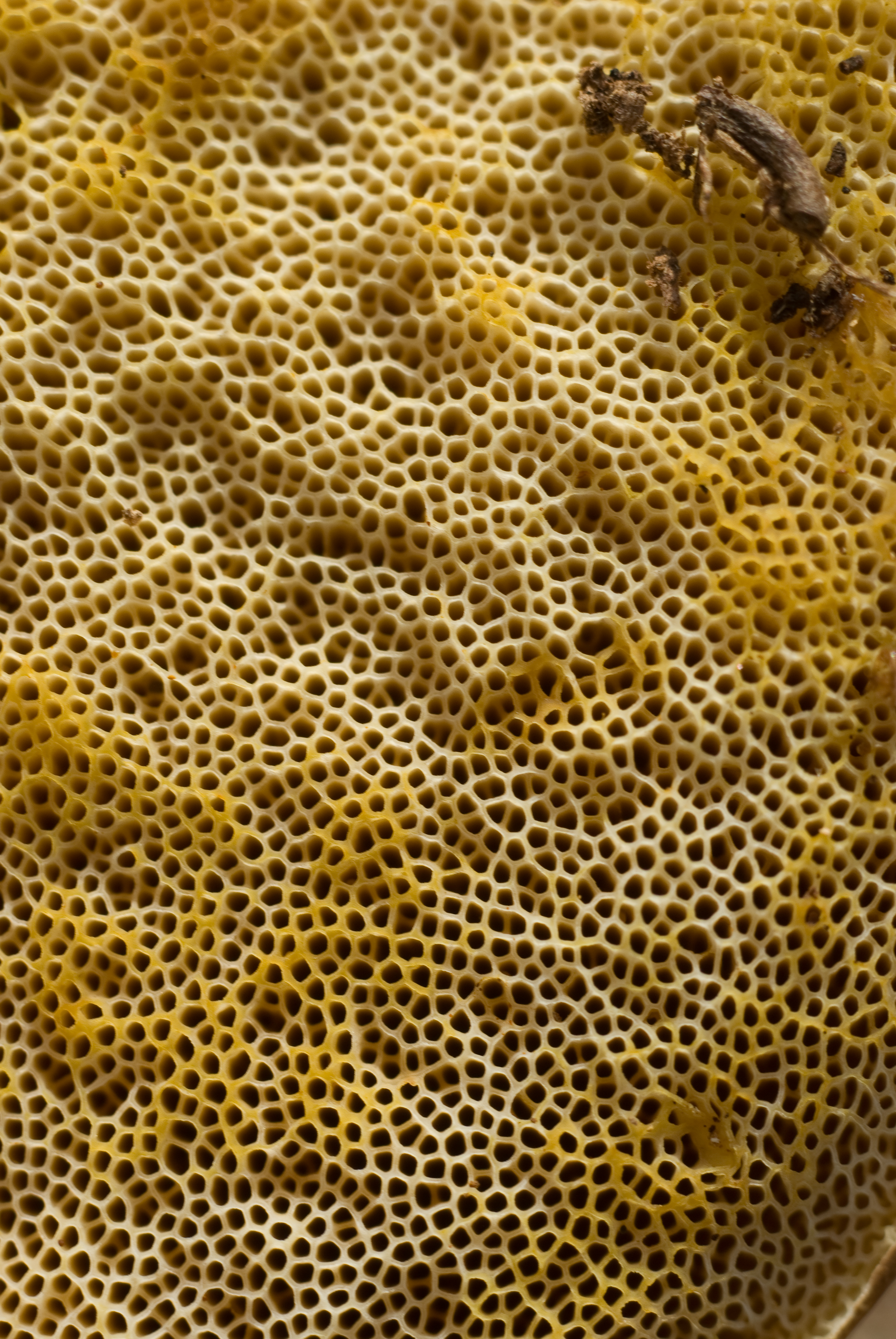
We’ve been so busy this summer working on new products, projects and coding adventures (and Jesse’s been teaching!) that we didn’t get a chance to take any exotic vacations but we did spend a nice week in the Adirondacks. We went camping at Indian Lake, NY with Jesse’s family. All the campsites are accessible by boat only and ours was a small island. We hiked, swam, and cooked over a fire, and told weird stories while eating smores. It was nice! You can find the pictures I took of various Adirondacks flora and fauna here. The photos below are of bolete mushroom pores, bubble aggregations, a toad, and a coral fungus.

Bolete mushroom pores bubble agglomerations

technicolor toad coral mushroom


megacaldera, supervolcano

Posted: August 17th, 2009 | Author: Jessica Rosenkrantz | Filed under: travel | Tags: , | No Comments »

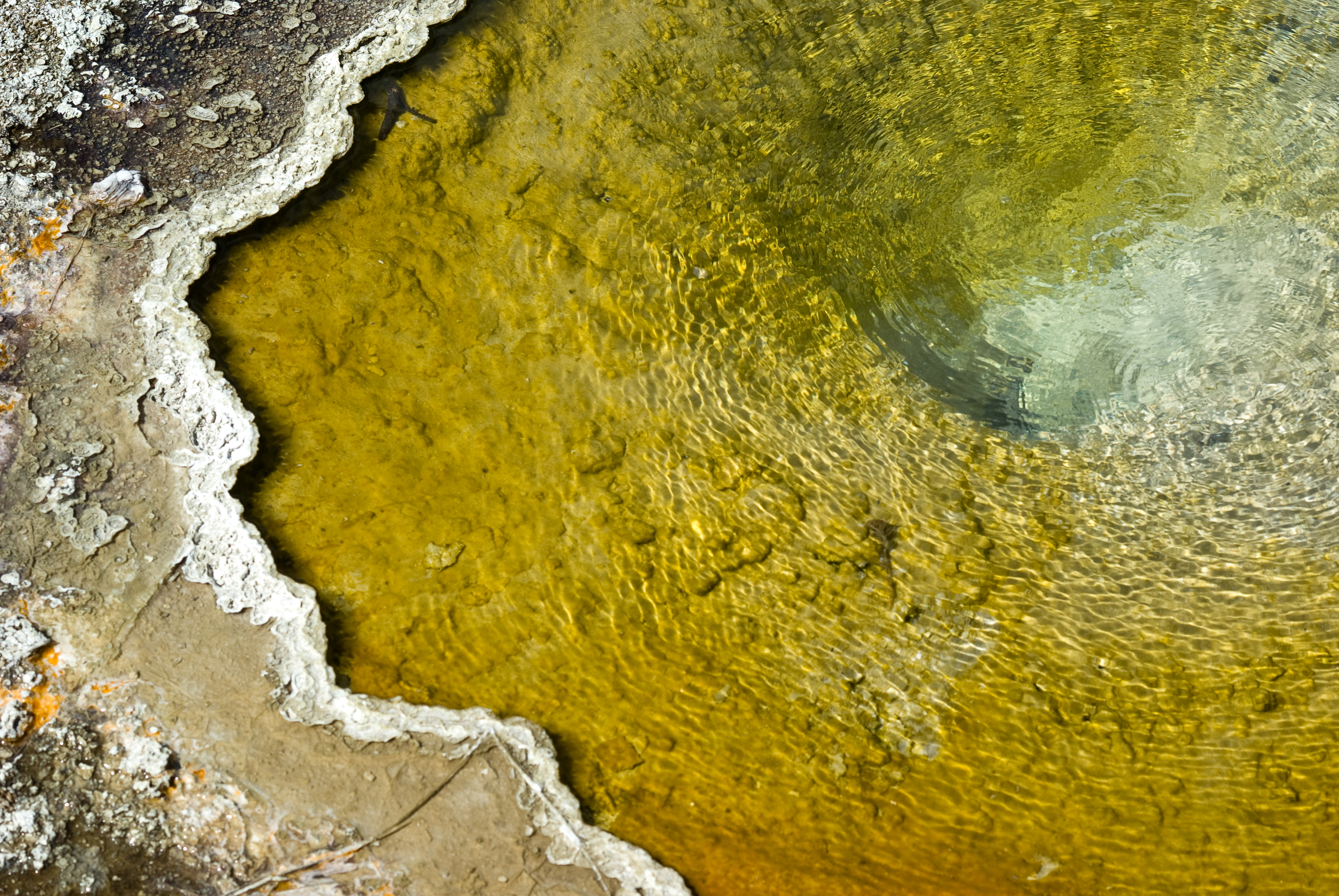
The reason we decided to visit Yellowstone was because it is home to the most spectacular geothermal features in the Americas. While in New Zealand we had a chance to visit the geothermal area and also tour White Island, a live marine volcano.  We were astonished and amazed at how alien and spectacular such sites were. The colors, textures, landscape formations, and also degree of temporal variability as the land opens up at sporadicly in the form of pores and fumaroles that alternately steam and bubble.Yellowstone has a bunch of sweet geothermal features including geysers, fumaroles, bubbling mud pits, sinter formations, pools of colorful thermophilic bacteria.  It turns out this is due to the fact that it sits right on top of a giant hotspot in the earth’s crust that is colloquially called a SUPERVOLCANO (I say colloquially because the term was coined by a BBC documentary in 2005)  Yes, SUPERVOLCANO, as in doomsday sized bursts of sun blocking blackness upon eruption. Don’t worry, it’s only erupted 3 times so far and not too recently either at 2.1 million, 1.3 million, and 640,000 years ago. Apparently the region does experience 1000 to 2000 detectable, albeit mild earthquakes a year.

really nice sinter formation at upper geyser basingeyser in the upper basinyellowstoneyellowstonevery awesome assortment of mini sinter formations! @ mammoth hot springs, yellowstone national park, wyominggrand prismatic springmammoth hot springs, yellowstone national park, wyoming


yellowstone

Posted: August 14th, 2009 | Author: Jessica Rosenkrantz | Filed under: travel | Tags: , | No Comments »

A few photos from our trip to yellowstone, America’s first national park which spans  a total of 3,468 square miles (8,980 km2) in Wyoming and is home to an incredible variety of wildlife and geologic areas (including our favorite…geothermal features, more on that later)


sunflower.jpg flower.jpg

butterfly.jpg ladybug.jpg

flowstone.jpg burn.jpg


Insectarium

Posted: August 12th, 2009 | Author: Jessica Rosenkrantz | Filed under: inspiration, travel | Tags: , , , | 1 Comment »

We spent last week in New Orleans for SIGGRAPH where we were artists in residence.  We got there a few days early to check out Louisiana; one of the places we visited was the Audubon Insectarium.  What is an Insectarium you ask? Well it is like an aquarium or zoo, except focused on insects.  They did not have as many live specimens as I would have liked but they had a whole room near the end of the exhibition covered wall to wall in prepared specimens, laid out in a very artistic manner.

They were drawing with bugs.  This is the part I really enjoyed.  Here are a few of my pictures:

insectarium-13 insectarium-14
insectarium-1 insectarium-5


Traditional Sights in Japan

Posted: December 13th, 2008 | Author: Jessica Rosenkrantz | Filed under: travel | Tags: , , | No Comments »

imgp2651.jpg imgp2634.jpg imgp2652.jpg imgp2750.jpg imgp2755.jpg imgp2764.jpg imgp2772.jpg imgp2794.jpgimgp2796.jpg imgp2800.jpg imgp2847.jpg imgp2839.jpg imgp2846.jpg imgp28500.jpg

Here are some more shots from our trip to Japan.  Click through to flickr to see more details about each one.  The images show the Chrysanthemum festival at Shinjuku Gaien, traditional structures at Engakuji in Kamakura, hiking in Kamakura, and incense and decorations at the Sensoji in Tokyo.

(oops! some of the images aren’t up on flickr yet, so you can’t click through all the images yet, should be uploading more on monday after the Bust Craftacular)


tokyo part 2

Posted: December 4th, 2008 | Author: Jessica Rosenkrantz | Filed under: travel | Tags: , , , | No Comments »

tods by toyo itoprada by H&deMswatch by Shigeru Bannagakin capsule tower by kurokawainternational forum by vinolydesign festa

We had a week in Tokyo after the finish of 100% design to tour the city.  We got to visit a lot of contemporary buildings that I had always wanted to see.  Here are a couple of my pictures.  From left to right: Tod’s by Toyo Ito, Prada by Herzog & de Meuron, Swatch by Shigeru Ban, Nagakin Capsule Tower by Kurokawa, International Forum by Viñoly, and the Design Festa building.

Seeing these buildings in person wasn’t actually much more impressive then seeing them on paper.  We found the traditional architecture we visited much more impressive.  Some images of that coming in tokyo part 3.