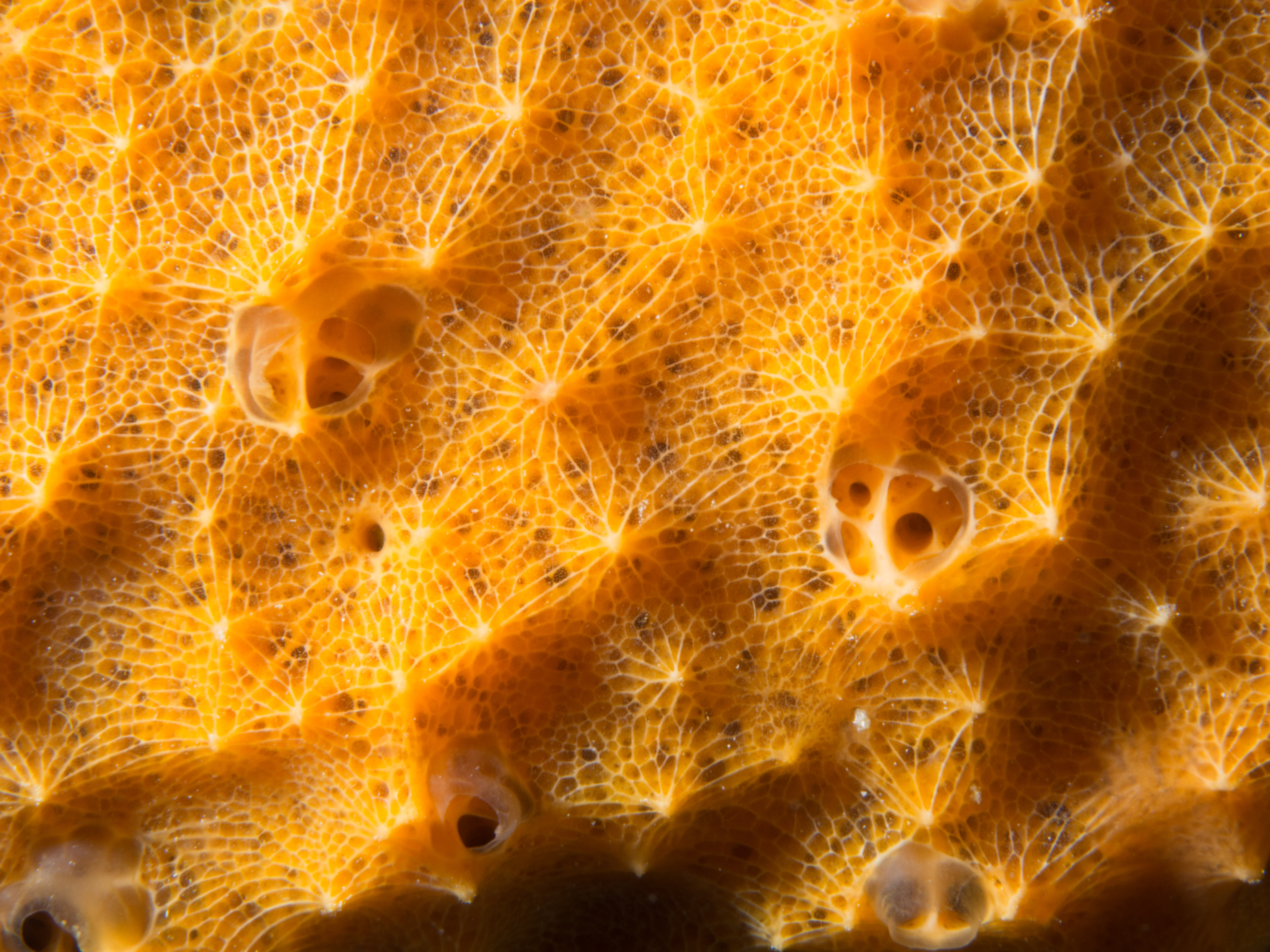
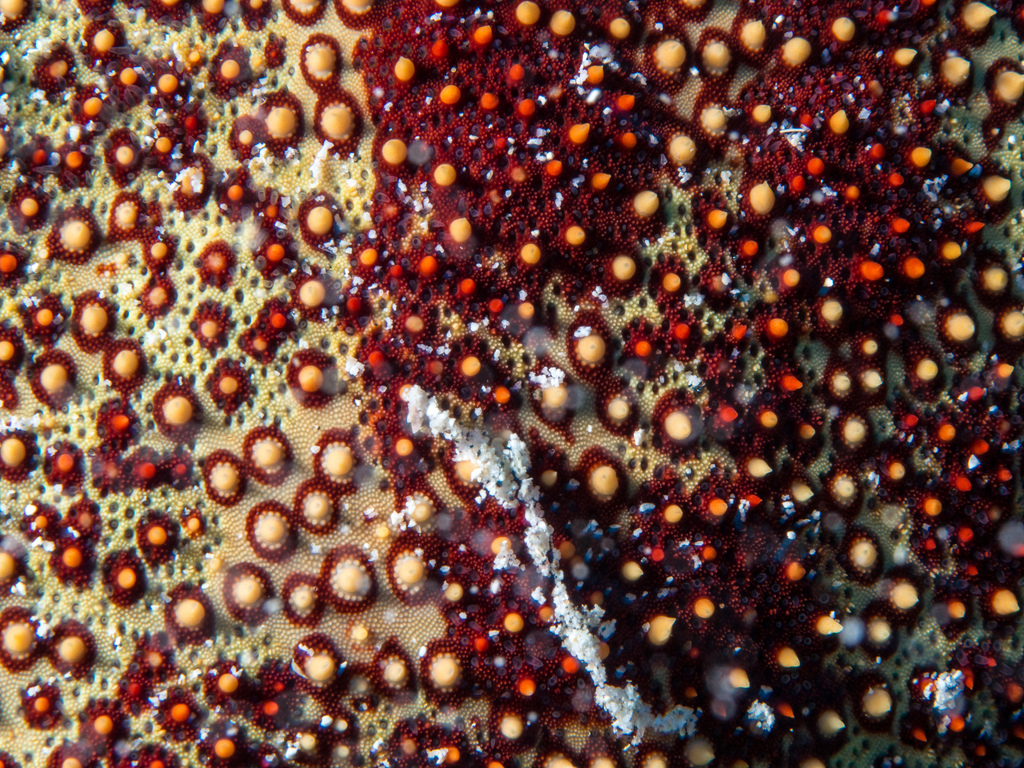
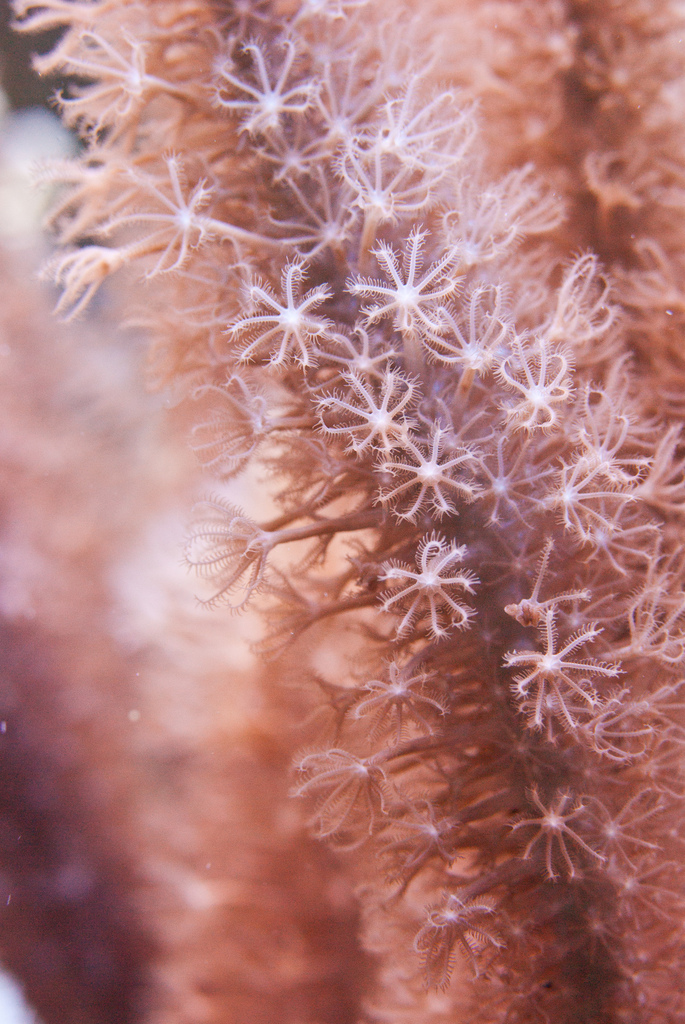
Ever since I was little, I’ve wanted to explore the ocean. Images of coral reefs and video of deep sea explorers captured my imagination and the ocean appeared to me as a wild, alien territory. My dream was to become a scuba diver. There was one major problem though, I’ve always been uncomfortable in water. Over the years, I’ve kept putting off taking a scuba diving certification course. I had plenty of excuses – “I can’t afford it,” “I’m too busy”, “I can’t swim well enough to pass the swim test portion without embarrassing myself.” Eventually I just got fed up with my own excuses. It’s funny how you can be a perfectly rational person in many aspects of your life but still let serious irrational fears get the best of you in other aspects. We signed up for scuba diving lessons with our local dive shop, United Divers.
Predictably, I hated it. The feeling of being trapped inside an armature of rubber tubes, a constricting neoprene skin and all the while breathing out of a can of air on your back in the deep end of a small, crowded pool wasn’t particularly enticing. We practiced skills like removing your mask and your air supply which triggered in me some kind of visceral animal terror. They lectured us about all the things that could go wrong in our bodies due to the increase in pressure – your lungs could explode, your eardrums could burst, you could get oxygen toxicity, you could get nitrogen toxicity, etc. I really didn’t want to go back. But, we went back anyways. Nine dives later, I think I’m starting to enjoy it…certainly I’ve gotten over the irrational fear part and now I just have the rational part.
After our first 4 dives, we became certified scuba divers. Dive number 5 was the first dive I could bring a camera on. Prior to our trip, I spent a few weeks researching underwater photography equipment. I ended up getting an Olympus ELP5 micro-4/3′s camera. Olympus is the only major camera manufacturer that makes dive housing for its cameras. Third party housings are very expensive, so it was cheaper to buy an entire new camera system with lenses than to buy the housing for my dSLR camera. I also considered how ginormous the housings for dSLR’s are and decided a smaller system would give me more flexibility in the water. My underwater photography rig consists of Olympus ELP5, Olympus PT-EP10 housing, Olympus 60mm macro lens with focus ring, and one Sea & Sea ys-01 strobe. As you can see below, it’s still quite big even though it’s smaller than a SLR system.
Taking photographs underwater is complicated. After you go down a few dozen feet, most sunlight has been absorbed so it’s rather dark. The red portion of the spectrum disappears first, so without a flash your photos will appear completely blue. Another issue is that the ocean is a dynamic environment, the water is constantly moving; so you are moving, your camera is moving and the things you are trying to photograph are moving. Not to mention the fact that you have to scuba dive while you do it; that means you have to watch your air consumption, maintain your buoyancy, keep track of your dive buddy, and not get lost all while operating your camera. Shooting with a strobe pretty much means you have to operate your camera manually, adjusting the strobe power, exposure and aperture for every shot. You also have to be really careful not that you aren’t bumping in to the stuff around you because most of it is alive and you want to document it, not kill it. To sum it up, underwater photography challenging. Most of the photos I took were complete rubbish. But, I’ve put some of the better ones in this post (these were shot at various dive sites in Kailua-Kona, Hawaii). Despite, the danger and difficulties, the ocean really is the diverse, alien landscape that I pictured it as when I was little.
We recently returned from Hawaii where we spent a week exploring Hawai’i Volcanoes National Park. The Big Island of Hawaii is made up of 5 shield volcanoes and was born a relatively recent 300,000 years ago. Today, three of the volcanoes (Kileaua, Mauna Loa, Hualalai) are still active, one is dormant (Mauna Kea), and one is extinct (Kohala). Kileaua is one of the world’s most active volcanoes and has been erupting continuously since January 3, 1983. We visited its active vent to see the flow of red hot lava and we hiked many miles in the lava fields formed by its prior eruptions. As you might have predicted, we found the fluid-like lava rock fascinating and documented its shapes in hundreds of photographs (slideshow below and flickr set). We also started reading about how and why patterns form in lava flows.
Lava
Lava is the molten rock expelled by a volcano during an eruption. Lava flows can have very different properties based on their chemical composition, temperature, eruption rate, crystal content, and bubble content. The current lava flow in Hawaii is an effusive flow of basalt with low viscosity and high temperature. It flows quickly and smoothly, leaving glassy rippled rock in its wake. Geologists call this type of flow pahoehoe, a Hawaiian name that equates the lava forms to swirling water (“hoe” = to paddle). This is an apt name as the lava rock is festooned with incredible patterns of contorted wrinkles, ripples, and folds. What causes these forms?
Lava Flows and Folds
When lava flows, the outside layer quickly cools forming an exterior crust. In fact, many of the lava patterns we found were quite thin and hollow inside where the lava had subsequently evacuated after the structures were formed. This cooled layer is significantly more viscous than the lava below acting like a viscous sheet. Folds begin to form when the flow compresses due to the slowing of the flow front. This compression could be caused by hitting an obstruction or entering a narrow channel. These folds form in the span of seconds to minutes.
Viscous Sheets
The folding of viscous or elastoviscous materials has been widely studied recently both in physical experiments with non-Newtonian fluids and numerical simulations. Pahoehoe lava forms exhibit relatively regular fold properties; their folds form perpendicular to the direction of flow with a consistent wavelength and amplitude. This property is shown very purely in examples of viscous sheets. Check out the videos below. One shows the buckling of pancake batter being poured into a pan (not kidding) and the other is a computer animation of similar from a paper presented at SIGGRAPH 2012.
Pahoehoe Dynamics
Pahoehoe flows exhibit significantly more complex dynamics than these isolated examples, incorporating viscoplastic behavior, cooling, shallow flow, and more with the folding process. Lava flow is not strictly a viscous sheet; it is a fluid with a layer of high viscosity that smoothly transitions to a large volume of lower viscosity fluid. This means that the lava exhibits fluid behavior generating interesting swirls and movement. You can even get lava spirals when multiple flows meet. Additionally, as the lava cools and compresses, the viscous crust thickens. Thickening increases the wavelength of the folds that form creating a larger scale pattern. This change in scale can occur 2-4 times over the cooling process, leading to recursive folds with a complex braided appearance.
diagram from 'Formation of multiple fold generations on lava flow surfaces: influence of strain rate, cooling rate, and lava composition' (1998) by Gregg, TKP, Fink JH, Griffiths RW
This explanation comes from the research of Jonathan Fink who has published a number of papers exploring ropy pahoehoe since 1978. The first paper, “Ropy Pahoehoe: surface folding of a viscous fluid”, describes how he measured the profiles of lava flows using this sweet apparatus.
In later papers, he uses experiments where liquid polyethylene glycol wax is forced through a hole into a tank of cold water to recreate different phenomena exhibited by lava flows. By varying the rate of cooling and the flow rate, he was able to produce features we see in basaltic lava flows including transverse folds, pillows, rifts and levees.
diagram from 'A laboratory analogy study of the surface morphology of lava flows extruded from point and line sources' (1992)
Other Interesting Stuff We Noticed About Lava
The varying degrees of oxidation and chemical composition lead to different colors.
Lava is very porous. It’s riddled with tiny vesicles where it hardened around gas bubbles.
You can poke a walking stick into the active lava flow and create your own glassy hunk of fresh rock.
Lava can form very regular features like these tiny folds.
But, it also can make bizaare features that look more like draped fabric than rock.
Pahoehoe makes forms called “toes” as hot lava breaks out from the cooling front and “entrails” when it moves quickly down a slope.
Lava just keeps piling up
And will flow over anything
Bibliography
Batty et al, “Discrete Viscous Sheets”, 2012
Fink, “Surface folding and viscosity of rhyolite flows”, 1980
Fink and Fletcher, “Ropy pahoehoe: surface folding of a viscous fluid”, 1977
Fink and Griffiths, “A laboratory analog study of the surface morphology of lava flows extruded from point and line sources”, 1992
Gregg et al, “Formation of multiple fold generations on lava flow surfaces: Influence of strain rate, cooling rate, and lava composition”, 1998
Griffiths, “The dynamics of lava flows”, 2000
Skorobogatiy and Mahadevan, “Folding of viscous sheets and filaments”, 2000
You may have noticed the new photographs on the front page of our shop. These lovely model shots are by Boston fashion photographer Natalia Borecka. We worked with her last month to capture our new Hyphae and Cell Cycle jewelry pieces. We hope you enjoy the photographs and that they give you a better idea of how the pieces look when worn. Here’s a selection of our favorite shots.
CapturingComplexity is a new shop on Etsy where I am selling some of my macro photography. Much of the inspiration for Nervous System comes from natural systems that we’ve been lucky enough to observe in person during our travels. The photographs are a way to encapsulate a visual of what interests us and are a reminder of phenomena we would like to later research.
I’ve posted a few of my favorite images from our hikes all over the world. The pictures feature the Catskills, the Northern California coast, Iceland and New Zealand and are available in 8×12″and 12×18″ sizes. All of the photographs were captured using a Pentax k10d camera with an old 55mm manual focus macro lens using natural light.
Please check out the new shop and let me know what you think!