We’re doing several fun events in the upcoming month, and we wanted to tell you about them.
3D Printing Night @Room 68 — April 4, 6-9pm
68 South St, Jamaica Plain, MA
Tomorrow night (April 4th) we’ll be at Room 68 from 6:00-9:00pm. Stores and galleries in Jamaica Plain stay open late on the first Thursday of each month, and our friends at Room 68 invited us to be involved. We love working with the Room 68 team, and we’re excited to be showing off a brand new cellular coffee table designed with our Radiolaria web app. You can also buy Nervous System lamps or jewelry and see a MakerBot 3D printer in action. Maybe we’ll make a 3D-printed cat for you!
Science Crawl @Xylem — April 18, 5-8pm
287 Third St, Cambridge, MA
On Thursday, April 18th, we’ll be hosting one of the stops on the Science Crawl, a Cambridge Science Festival event. We’re thankful to our friends at Xylem for letting us use their store. We hope you’ll come by and see the exhibition: we’re going to transform Xylem into a space where you can explore everything Nervous System. We’ll have all our new stuff on display, including tables, superhard jigsaw puzzles, and neon-colored jewelry. We’re also going to invite visitors to experiment with our interactive design tools, and Jesse and Jessica will be there to explain the math and science behind their designs. Ask them anything!
Somerville Open Studios @Nervous System — May 4-5, 12-6pm
561 Windsor St, Suite A206, Somerville, MA
In May, we’re going to be involved with Somerville Open Studios, a great event where artists all over Somerville invite people to see the spaces where they create. First, Nervous System will be featured at the Somerville Open Studios fashion show on May 1st. The fashion show starts at 7:30pm in the Center for Arts at the Armory. Then, on May 4th and 5th, the Nervous System studio will be open from noon til 6:00pm, and we’d love for you to come visit. We’ll be featuring our interactive design tools, and we plan to show some new experiments as well.
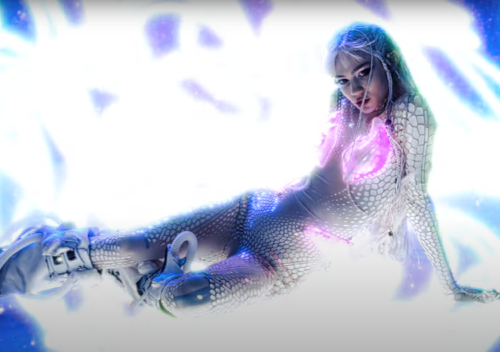
Ever since we started Nervous System back in 2007, I’ve wanted to make clothing. Generative jewelry is great, but a complete generative outfit is even better. Today, I am happy to announce that our first ever clothing line is now available for purchase. We’ve teamed up with our friends Continuum fashion to offer an exclusive collection of dresses, shirts and skirts through Constrvct.com. The collection encapsulates our fascination with how complex forms emerge in nature. Each piece is based on a different pattern generating phenomenon. The designs are produced using digital fabric printing and made to order in your exact measurements.
Initially we decided to limit the collection to 5 dresses. But after producing prototypes of each one and seeing how great they were, we decided to open it up a bit. Each of the dresses shown above has its own collection. The five collections are: Natural, Laplacian, Reaction, Spines, and Branch. Here are some images of each collection and also some suggested dress and jewelry pairings.
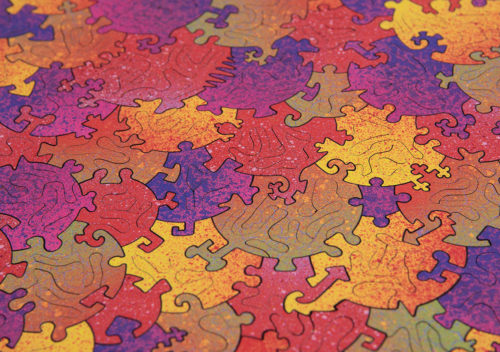
The Laplacian collection features organic branched structures grown in a simulation of crystal growth. These forms were generated in a 3 dimensional simulation of dendritic solidification. This is very similar to our ammonite line and our jigsaw puzzles. You can see a video of our system here: Laplacian Growth Video.
The Reaction collection features maze-like patterns of ripples and folds inspired by coral and sand-dunes. This was created by the same reaction-diffusion system we create to make our Reaction housewares collection. Reaction-diffusion is a chemical signalling process that describes how stable patterns can emerge the diffusion and reaction of two or more chemicals. It can be used to explain the skin and shell patterns of many animals. This video shows our design system: Reaction Cup video.
The Branch collection features branching patterns created with a self repelling, growing, branching system inspired by the forms of plants and algae. This video shows a version of the system: Growing box video.
The Natural collection is created from my photographs of natural patterns. I travel everywhere with camera in hand, searching for strange yet beautiful phenomena that reveal how the world constructs itself. Pieces in this collection feature macro photographs of lichen, coral, leaf venation, sinter terraces, flower organization, insects, and fungi. Many of the forms I’ve captured have influenced the development of our generative software.
Spines features generative designs inspired by all things spiny – sea urchins, cacti + pencils. The software I created for this set of designs is based on our Radiolaria cellular design system but with protruding spines where the holes should be. See this set for reference: barnacles / spines/ tentacles set. With this collection, I was primarily playing with the movement of the spines across the body and how to use color since we are usually so focused solely on geometry.
Processing.org is now running a Spring 2011 fundraiser and has made our BRAIN shirt available again! For $22USD you can buy the shirt and support Processing’s development. The last day to buy is May 16th.
“Processing is an open source programming language and environment for people who want to create images, animations, and interactions. Initially developed to serve as a software sketchbook and to teach fundamentals of computer programming within a visual context, Processing also has evolved into a tool for generating finished professional work. Today, there are tens of thousands of students, artists, designers, researchers, and hobbyists who use Processing for learning, prototyping, and production.”
The shirts feature a drawing of an early sketch of our Seed Lamps created using reaction-diffusion simulations and rendered using sunflow.
We are looking to hire a generative designer full-time to work with us at Nervous System. Here’s the job description.
—-
Nervous System seeks a full-time employee with a wide range of skills. The position will fill a variety of roles as we grow our business into more domains depending on applicant’s skills and interests. Roughly half your time will be spent managing our general day-to-day business concerns and the other half will be spent participating in ground-breaking generative design work.
administrative tasks
* general office management: preparing and filling orders
* critical design feedback
* operating digital fabrication equipment (laser cutter, cnc router, makerbot)
* sourcing manufacturers, supplies, and materials
* finishing and assembling products
opportunities
* writing software/libraries for digital design
* researching natural pattern forming processes
* design of packaging and displays
* product photography
* working on large scale installations
* designing interactive experiences
Applicants should be organized and friendly (comfortable contacting customers, stores, and suppliers). Experience and excitement in design, computer programming, 3D geometry, digital fabrication, and manufacturing techniques are all a plus. It is also desirable for applicants to have some experience in science or engineering.
To apply, please email us a letter of introduction and a link to your portfolio or website.
We designed these tiling silicone rubber trivets with Modern Twist last year. They will finally be for sale in April through our website and stores all over the country. They come in 7 colors and tile completely….but I like to leave gaps when I tile them. I finally got to see the design in person when we were at NYIGF last week.
image courtesy of Modern Twist
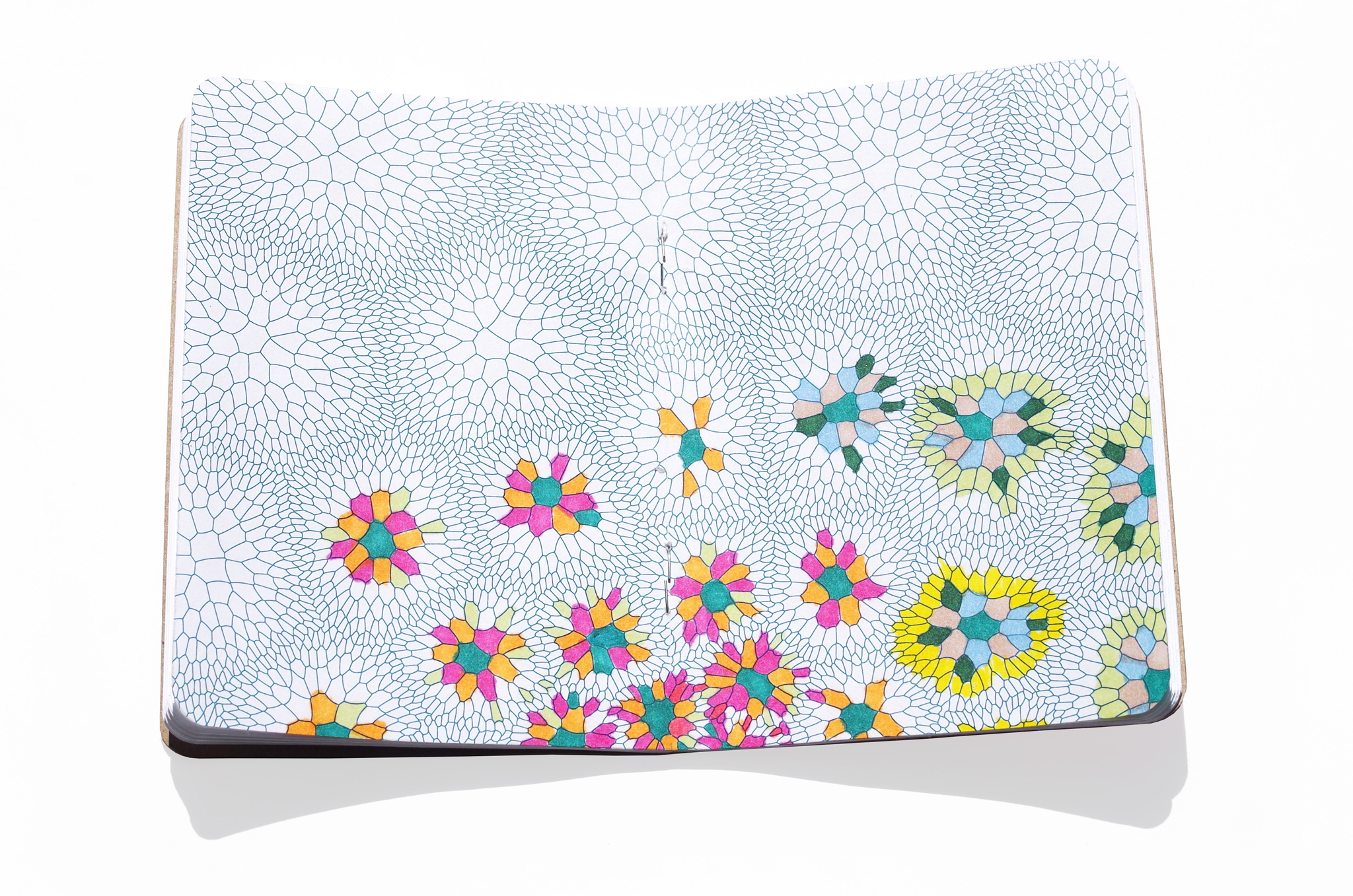
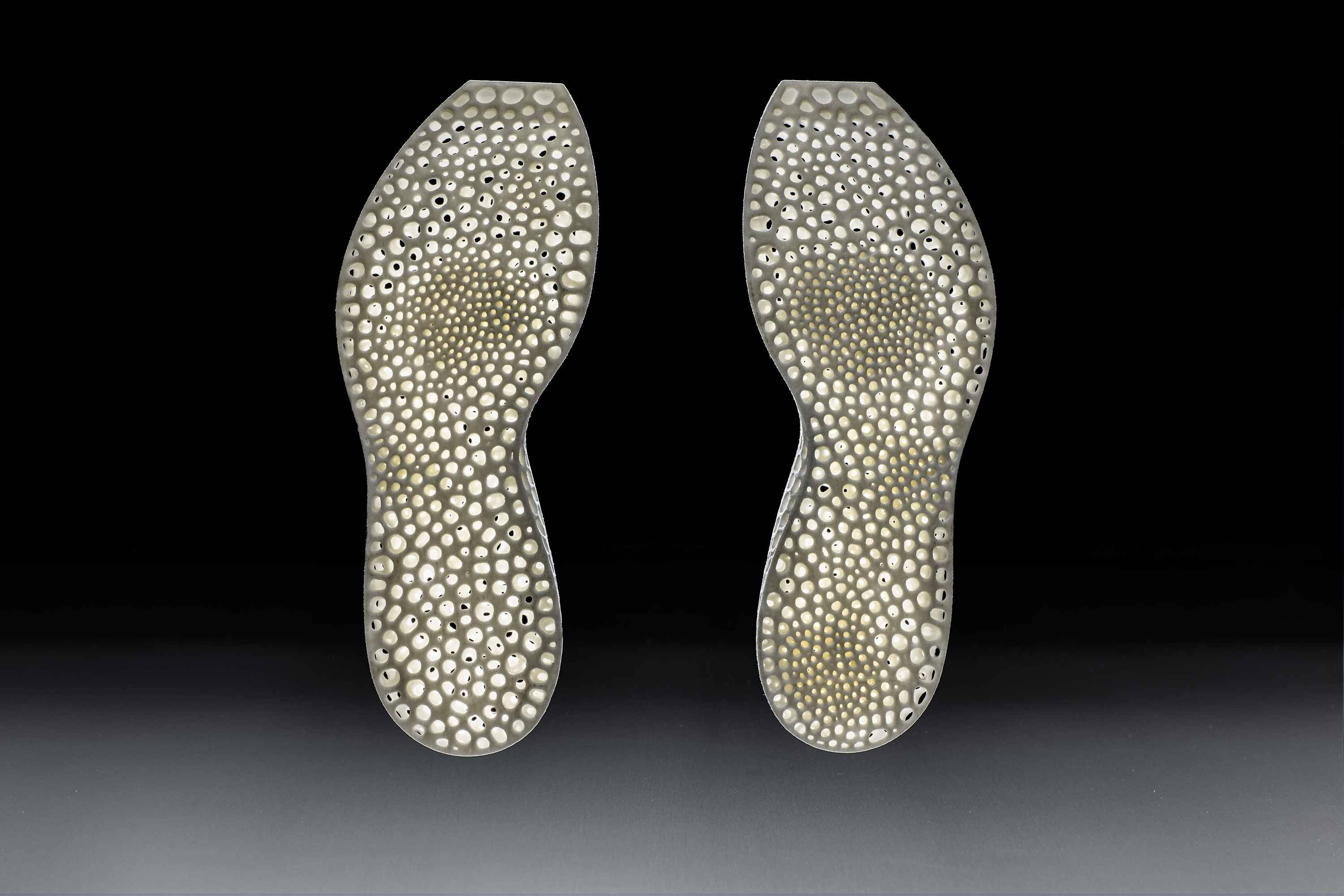
The design was created in our Radiolaria software, a Processing app we created that simulates a cellular network. It uses a physics simulation of a spring mesh where cells can been subdivided and are effected by attractive, repulsive, and spiraling forces. You can watch me playing around with it here or below.
You can see more photos of the pieces in this post by Design Milk
During spring break I was asked to help with a project thought up by Harvard GSD Professor Ingeborg Rocker and her 1st year students. One of the 1st studio projects involved developing an aggregation, they wanted to take one of their aggregations and build it full scale using the 6-axis ABB Robot the school recently purchased. I had already been fairly successful in developing some code for the robot for an assignment for Martin Bechtold’s Construction Automation class, so I was pretty excited to give a full scale project a go.
The finished piece is two 7 foot high walls, 20 feet long with a central room/space in between. Jesse and I developed the software that allowed this to happen. We created a Rhinoscript that generates the RAPID code needed to run the machine directly from Rhino geometry. RAPID code describes the position and orientation of a series of targets and the path the robot must take between the targets as well as the configuration of the robots joints at each position and when to open and close the gripper, etc.
The whole project took the cooperation of many people. All of the bricks were cut from 2×4′s and sanded down. The wall was divided into segments that could be constructed by the robot and brought up from the basement into the Pit/lobby space where they were assembled. The whole thing is held together with wood glue and screws were used to hold the robot assembled chunks together.
I spent a lot of time coordinating day to day with the leading team (Jeff, Misa, Ben, and Teresa) and it was a lot of fun, congrats guys!
Leading Team:
Jeff LaBoskey, Misato Odanaka, Benjamin Franceschi, Teresa McWalters
Coding:
Jessica Rosenkrantz, Jesse Louis-Rosenberg, Christian J. Lange, Rocker-Lange Architects
Core Team:
Matthew Swaidan, Tory Wolcott, Ricardo Munoz, Natalya Egon
Team:
Elizabeth Farley, Carl Koepcke, Jeongyon Kim, Eva Leung, Masana Amamiya, Matthew Fiely, Tessa Kelly, Alicia Taylor, Cara Liberatore, Lindsay Chandler-Alexander, Julian Bushman-Copp, Jessica Knobloch, Yuhka Miura, Ben Brady, Sen Ando, Theodore Diehl, Chelsea Garunay, Ka Yip, Lesley McTague, Jessica Vaughn, Jason Phipps, Paul Merrill, Annie Kountz, Jeremy Jih, Brian Militana, Brad Crane, Matt Waxman
Special Thanks:
Stephen Hickey, Martin Bechthold
Funding:
Junior Faculty Grand, and Preston Scott Cohen